Great Texas-style barbecue is not a race to dinner. It is the combination of fire, smoke, good meat, and the patience to let each do its job. A smoker may be the centerpiece, but understanding what happens inside it is what turns a long cook into a memorable meal.
What “low and slow” really means
Barbecue cooks often use moderate, steady heat over many hours rather than the intense direct heat of a grill. The exact pit temperature depends on the cut, the cooker, and the cook's approach. Large, hard-working cuts such as brisket or beef chuck contain connective tissue that needs time to soften. Ribs and other cuts respond differently, so there is no single clock that tells you every piece of meat is ready.
This is why experienced pitmasters pay attention to how the meat feels as much as they watch a thermometer. Temperatures are useful checkpoints, not a substitute for judgment. A cook that looks finished on the outside may still need time to become tender throughout.
Start with a clean, steady fire
Smoke is an ingredient, and like any ingredient, balance matters. A well-managed fire helps create the rich flavor people associate with traditional barbecue. Dense, dirty smoke can leave meat tasting harsh or bitter. The goal is steady heat and clean combustion, with enough airflow for the fire to breathe.
Wood choice affects flavor, too. Texas barbecue is often associated with oak, but different pits, fuels, and blends produce different results. Consistency matters more than chasing a magic species of wood. If the fire keeps changing, the cook has to keep compensating.
The bark: where seasoning and smoke meet
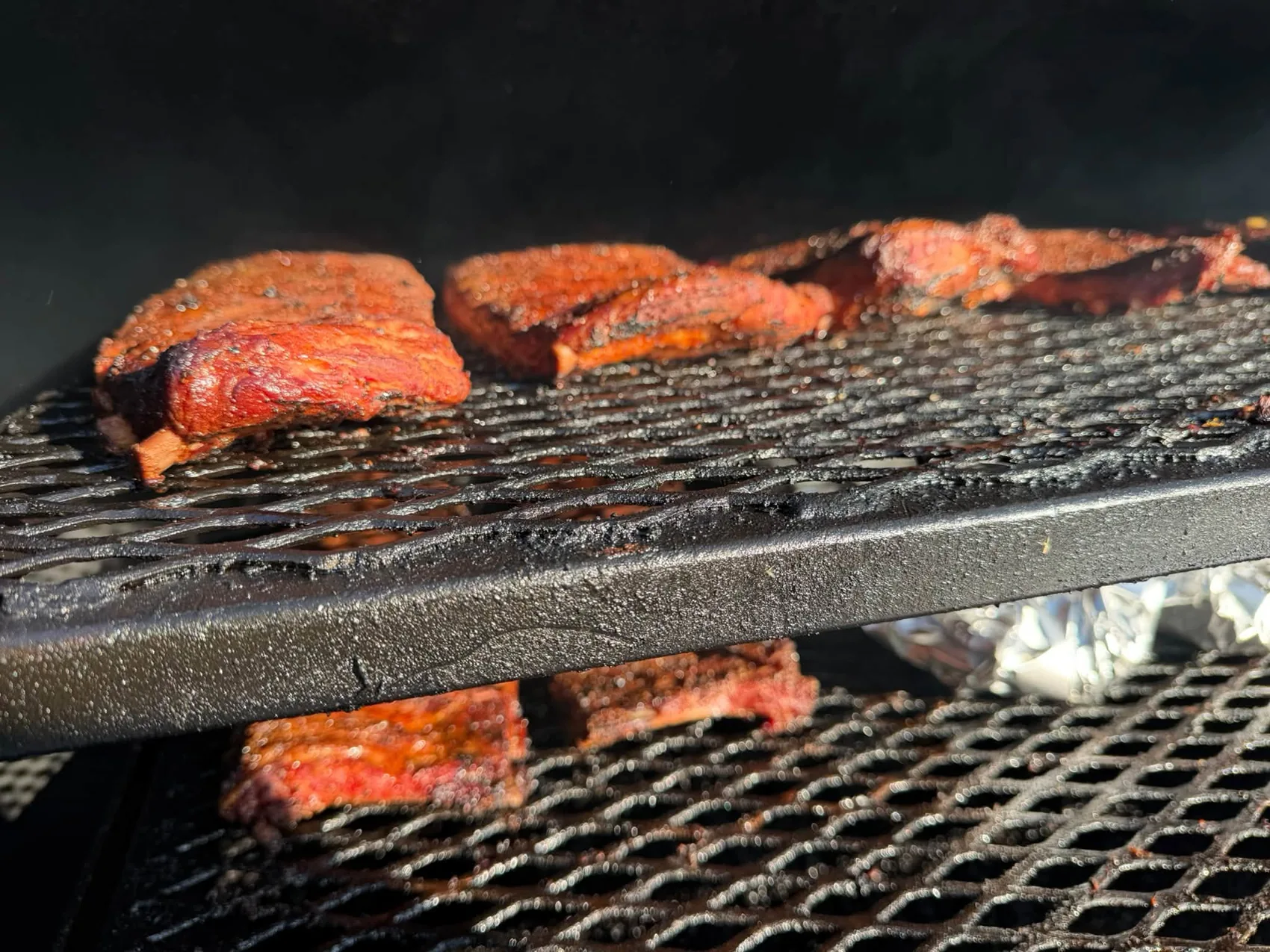
That dark exterior on a well-smoked piece of beef is called bark. It develops as seasoning, surface moisture, smoke, and heat interact over time. Bark should contribute flavor and texture without overwhelming what is underneath. Good barbecue gives you a bite that includes both the seasoned outside and the juicy, tender interior.
Seasoning can be simple. Texas-style preparations frequently let salt, pepper, and the beef do most of the talking. More complicated rubs can be delicious, but they are not required to make a satisfying smoked cut.
Why barbecue sometimes seems to stop cooking
During a long cook, the internal temperature of a large cut can rise slowly or appear to stall. Evaporation from the meat's surface can cool it as heat continues to flow into the cut. That's normal. Some cooks wrap meat partway through; others leave it exposed longer to build a firmer bark. Either approach involves tradeoffs between texture, moisture, and cooking time.
A long cook also needs a rest. Slicing immediately after the meat leaves the pit can cost moisture and make serving less consistent. Resting, holding, and slicing at the right time are part of the cooking process—not afterthoughts.
Why event barbecue takes planning
Cooking for a crowd adds another layer. It is not simply cooking one rack of ribs twenty times. The pit has finite space, different meats finish at different times, and guests still expect to eat together. A good service plan works backward from the meal time and leaves room for holding, carving, setup, and the unexpected.
For an outdoor event in North Central Washington, wind, temperature, site access, and available space can affect the plan. The more details the cook has in advance, the smoother the meal can be.
The best part happens around the table
There is a reason people gather near a smoker. The smell travels, someone asks what is cooking, and suddenly a meal becomes part of the event. The craft matters, but so does sharing it. That's the idea behind Goldtown Smoke BBQ's true Texas-style approach: honest food and a reason to come together.
Planning a gathering in Oroville, Tonasket, Omak, Okanogan, or farther afield? Tell Billy your date, location, and estimated number of guests so you can discuss what might work for your event. Menu choices and availability are confirmed individually.
Bring the smoke to your next event
Ask about availability, event details, and the right BBQ plan for your crowd.